
By Any Other Name
Shakespeare or Basano: The resurrection of an erasure 400 years old?

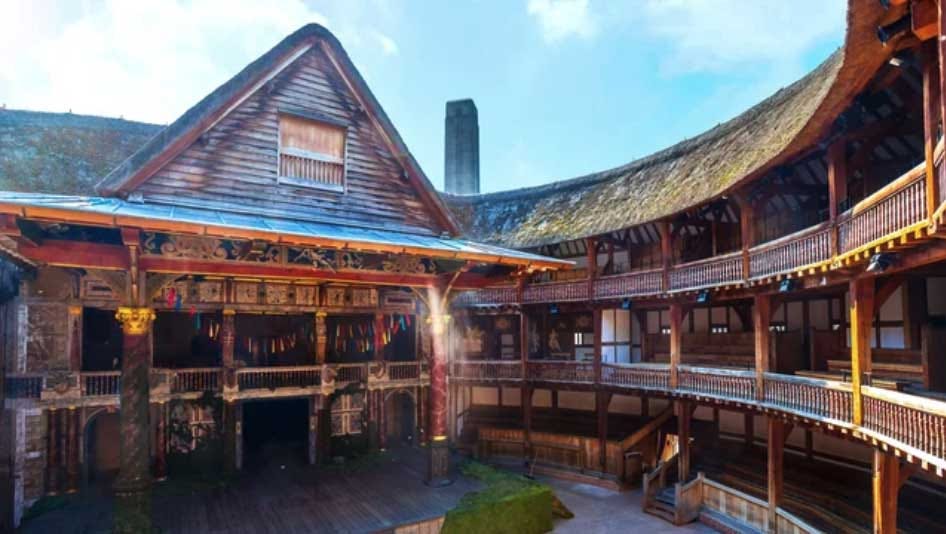
It is one of the biggest mysteries of our time.
Did Shakespeare write the works attributed to him? Historians, scholars, authors, and Supreme Court justices have all delved into the question and decided that he may not, in fact, be the author of all that bears his name.
In 2019, journalist and literary critic Elizabeth Winkler wrote an essay for The Atlantic titled, “Was Shakespeare A Woman?” The backlash was immediate and furious, but she didn’t let the idea rest. In 2023 she published Shakespeare Was a Woman and Other Heresies: How Doubting the Bard Became the Biggest Taboo in Literature.
Even though scholars admit that Shakespeare’s biography is a “black hole,” publicly questioning his authorship has been unacceptable, or even “immoral.” But Winkler didn’t let that deter her. She interviewed scholars and skeptics, and she ended up turning to the larger issue of historical truth—and of how human imperfections (bias, blindness, subjectivity) shape our construction of the past. “History is a story, and the story we find may depend on the story we're looking for.”
That set the stage for another author to join the fray. Enter writer Jodi Picoult. Intrigued, she began researching. How could Shakespeare, a man solidly rooted in his time when women had no rights, write women so well? How could he have written intimate details of the Danish court when he’d never been there? How did he come up with the names Rosencrantz and Guildenstern? How did Shakespeare, a working actor and producer, have the time to write all those plays?
Picoult’s research took her to Emilia Basano, one of the possible authors of the works attributed to Shakespeare, and the first woman to publish a book of poetry in England, a clever, outspoken, educated woman from a family of court musicians who also was a hidden Jew. At a very young age, she became the courtesan of a much older nobleman, a man who vetted plays to be performed for Queen Elizabeth. In his company she visited Italy and Denmark and became acquainted with the leading playwrights of the time, and she began writing poetry and plays. “Every gap in Shakespeare’s life or knowledge that has had to be explained away by scholars, she somehow fills,” Picoult writes.
Unfortunately, 16th century England would never accept a female playwright, a situation Picoult had personally encountered in her connections to today’s theater culture.
Picoult explores both of those worlds in By Any Other Name, a dual timeline novel that introduces us to Emilia and to her modern-day descendant, Melina, a struggling playwright, who writes a play about her ancestor. Her play, Melina declares, “wasn’t meant to be a fiction, it was meant to be the resurrection of an erasure.”
With no voice of their own, Melina and Emilia find ways to secretly bring their works to the stage. For Emilia, paying a man, William Shakespeare, for the use of his name erased her own name from history.
Picoult’s research was prodigious, intriguing, and convincing. Through her meticulous research we see a different William Shakespeare from the writer we have revered for so long. For instance: he was never formally educated, he never collaborated with other playwrights during a time when that was the norm (there were no copyrights), he never traveled, there is nothing suggesting he played a musical instrument, although there are a couple thousand musical references in his plays, and he humanized Jews, at a time when antisemitism was the norm. These are just a few of the contradictions Picoult mentions, and who did know these things? Emilia Basano.
“What really irked me (and stuck like a splinter in my mind) was that Shakespeare had created some of the most clever, fierce, protofeminist characters in all of literature—Portia, Beatrice, Rosalind, Viola, Lady Macbeth, Juliet, Katherine, Cleopatra—but he never taught his own daughters to read or write. They both signed with a mark,” Picoult says in her Author’s Notes.
Did William Shakespeare write the 39 plays and 154 sonnets credited to him? Picoult’s conclusion? “I. Do. Not. Buy. It.”
Why not a woman? Why not Emilia Basano?
************
Cowboy/Cowgirl Lingo of the Day
Unexpected as a fifth ace in a poker deck: Something unlooked for
As in: The possibility that Shakespeare did not write all the works attributed to him is as unexpected as a fifth ace in a poker deck.
*************
I am the author of seven non-fiction books, including The Last of the Wild West Cowgirls: A True Story. I’m currently working on a novel about cowgirl spies. Follow me on Cowgirl Cocktail by subscribing. You can also find me on Bluesky and Facebook.
Fascinating!